


Everyday Chemistry
USP. FCC. GRAS. NSF 60. If you’ve ever read the label on a bottle of vitamin C, a jar of citric acid, or a jug of pool chemicals and wondered what those letters actually mean, you’re not alone. These abbreviations show up everywhere from supplement bottles to water treatment plants, and most of us scroll right past them. Here’s what they’re really telling you — and why the difference can matter more than you’d think.
Why a Few Letters on a Label Can Mean So Much
Here’s something most people don’t realize: the same chemical, with the exact same name, can be sold in versions with very different levels of purity. Citric acid sold for industrial cleaning and citric acid sold for food production might both say “citric acid” on the package — but one of them has been tested to a much stricter standard than the other.
That’s where grading and certification systems come in. They’re essentially a shorthand that tells you how pure something is, who verified it, and what it’s safe to be used for. Once you know how to read them, a lot of confusing packaging suddenly makes sense.
USP: The Pharmacy-Grade Standard
USP stands for United States Pharmacopeia, a nonprofit organization that’s been setting purity standards for medicines and ingredients since the 1800s. When something is labeled “USP grade,” it means the product has been tested against published standards for purity, strength, and identity — including limits on things like heavy metals and microbial contamination.
You’ll see USP grade on ingredients used in medications, supplements, and many personal care products. Glycerin, propylene glycol, and citric acid are common examples of chemicals that frequently carry a USP designation.
FCC: The Food-Grade Standard
FCC stands for Food Chemical Codex, and it’s published by that same USP organization — just aimed specifically at ingredients that end up in food and drinks rather than medicine. An FCC-grade ingredient has been tested for purity, contaminants, and identity against standards built for food safety.
You’ll often see ingredients labeled “USP/FCC,” meaning they meet both standards at once. That’s common with things like citric acid and sodium bicarbonate, which show up in both pharmaceutical and food applications.
GRAS: “Generally Recognized as Safe”
This one trips people up because it sounds like a purity grade, but it isn’t. GRAS is a legal safety status from the FDA, not a measure of how pure something is. It answers a different question entirely: not “how clean is this?” but “is this allowed in food in the first place, and at what amount?”
A substance earns GRAS status one of two ways: either it has a long, well-documented history of safe use in food (think salt, vinegar, baking soda), or a panel of qualified experts has reviewed the science and agreed it’s safe for its intended use. Common GRAS ingredients include citric acid, ascorbic acid (vitamin C), and potassium sorbate.
One nuance worth knowing: GRAS status is almost always tied to a specific use and amount. Something that’s GRAS as a preservative at a tiny concentration isn’t automatically GRAS as a main ingredient at a much higher one.
Kosher and Halal: When Faith Shapes the Formula
Two of the most widely recognized certifications on food and personal care labels come from religious dietary law rather than government regulation.
Kosher certification verifies that a product complies with Jewish dietary law. For chemical ingredients, this often comes down to sourcing — glycerin, for instance, can be made from animal fat or from vegetable oil, and only certain sources qualify. Look for symbols like OU (Orthodox Union), OK, or Star-K on packaging.
Halal certification confirms a product complies with Islamic dietary law — no pork-derived ingredients, no alcohol used as a carrier, and humane sourcing for anything derived from animals. Organizations like IFANCA in the U.S. handle halal certification here.
Interestingly, the two certifications overlap quite a bit (no pork, no blood, similar processing rules), so it’s common to see products that are both kosher and halal certified at once.
NSF/ANSI 60: The Standard Behind Your Tap Water
Here’s one most people never think about: the chemicals used to treat your municipal drinking water — chlorine, caustic soda for pH balance, and similar treatment chemicals — have to meet a specific safety standard called NSF/ANSI 60.
This certification, developed by NSF International, makes sure that any contaminants a treatment chemical could introduce into your water stay at a tiny fraction of the level considered a health concern. It’s one of the quieter pieces of infrastructure that keeps tap water safe, and most municipalities are legally required to use NSF 60-certified chemicals in treatment.
Assay: The Number That Tells You What You’re Actually Buying
Assay is just a fancy word for “how much of the real thing is actually in here,” expressed as a percentage. A product labeled “98% assay” sodium hydroxide is 98% sodium hydroxide and 2% water or other residual material.
This matters more than it sounds like it would. A cleaning solution at 10% active ingredient and one at 12.5% aren’t the same product even if they’re priced similarly — you’re getting noticeably less of the working ingredient in the weaker one. It’s the same idea as comparing concentrated juice to diluted juice: the label tells a different story than the price tag alone.
CAS Numbers: Chemistry’s Universal ID
Chemicals often go by multiple names — common names, trade names, scientific names — which gets confusing fast. That’s why every registered chemical substance has a CAS number, a unique numeric ID assigned by the Chemical Abstracts Service. Citric acid, for example, is always CAS 77-92-9, no matter what brand or name appears on the bottle. If you ever want to verify that two products are really the same substance, the CAS number is the fastest way to check.
SDS and GHS: The Safety Information Hiding in Plain Sight
Any chemical product sold for industrial or commercial use comes with a Safety Data Sheet (SDS) — a standardized document covering everything from first aid measures to storage requirements to what happens if it spills. These documents follow a globally agreed-upon format called the GHS (Globally Harmonized System), which is why hazard pictograms and warning labels look similar no matter where in the world a product was made.
If you’ve ever noticed the little diamond-shaped warning symbols on a cleaning product — a flame, a corrosion icon, an exclamation mark — that’s the GHS system at work, giving you an at-a-glance read on what you’re handling.
A Few More Worth Knowing
Anhydrous vs. hydrated — “Anhydrous” means a chemical contains no bound water; “hydrated” forms have water molecules built right into their crystal structure. Same base chemical, different weight and handling properties.
Hygroscopic — A substance that readily pulls moisture out of the air. It’s why some products clump or change weight if you leave the container open.
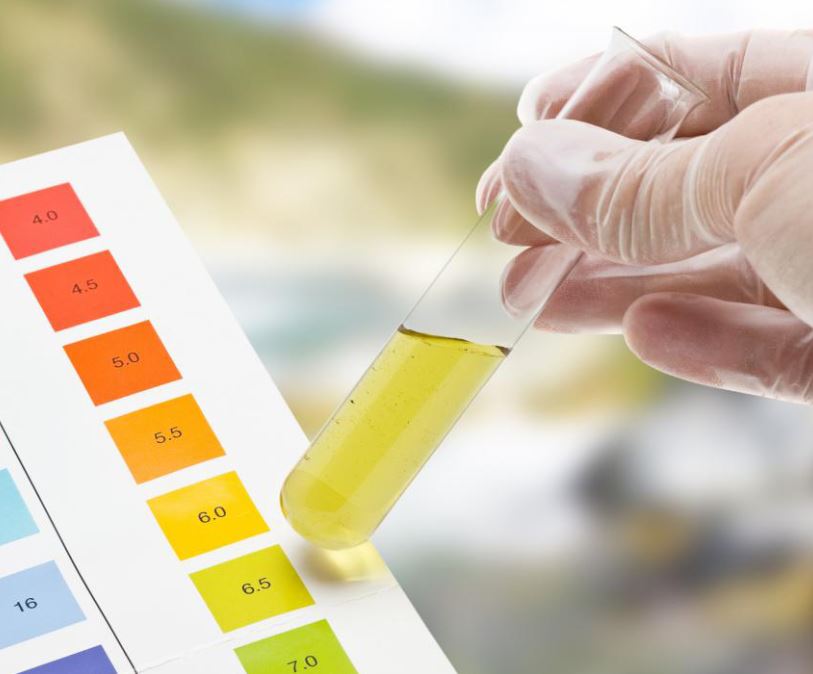
pH — The 0-to-14 scale measuring acidity or alkalinity, with 7 being neutral. It shows up everywhere from pool maintenance to skincare to cooking.
The Takeaway
None of this vocabulary is designed to be confusing on purpose — it exists because chemistry needs a precise, shared language, and that precision is what keeps food, medicine, water, and the products in your home safe and consistent. Once you know what a handful of these terms mean, label reading gets a lot less mysterious.
If you’re the one sourcing these ingredients rather than just reading the label — for a business, a lab, or a larger project — suppliers like Level 7 Chemical carry USP, FCC, and technical-grade chemicals with the documentation (COAs, SDS sheets, and certifications) to match.